Web Art Review: The Tea Story
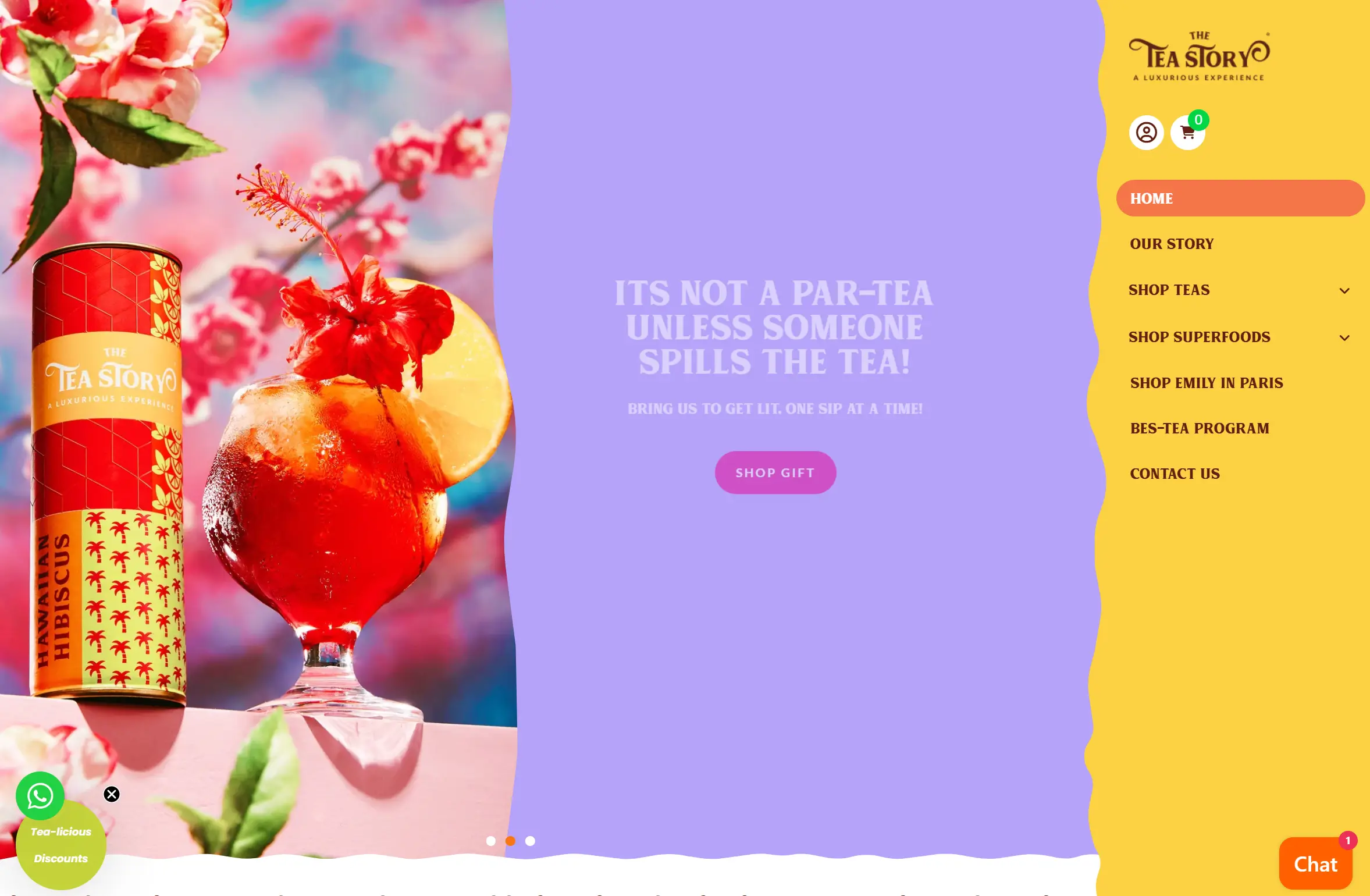
Web Art Review: The Tea Story
"The Steeping of Digital Sentiment: Illustration as a Narrative Bridge"
The critique of The Tea Story is an essential case study for vibecodingmap.com because it demonstrates how VIBRANCE can be achieved through delicate, hand-drawn warmth rather than high-tech animations. It is a masterclass in using "Emotional UX" to bridge the gap between a digital transaction and a sensory experience.
This review explores how "Soft Storytelling" and "Illustrative Continuity" can create a calming yet highly effective commercial Aura.
1. Purpose & Logic: The Logic of Gentle Persuasion
Mission Fulfillment (9.4): The goal is to sell not just tea, but a "Moment of Peace." The site succeeds by slowing down the user's pulse through a soft, sequential narrative that prioritizes the origin and mood of each tea blend over price tags.
Navigation Logic: It utilizes a Thematic Flow. Instead of a cold "Shop All" grid, the logic is categorized by "Moods" or "Times of Day." This aligns with the user’s emotional state, making the UX feel like a personal recommendation from a friend.
Vibecoding Insight: The logic here is Empathy. The art lies in the transition—how the site moves from a story to a product without breaking the "Vibe" of relaxation.
2. Visual Mechanics: The Palette of Tranquility
Illustrative Harmony: The site uses custom, soft-textured illustrations that wrap around UI elements. These aren’t just decorations; they serve as Visual Anchors that give each page a unique, artisanal identity.
Color Psychology: A palette of muted pastels—matcha greens, floral pinks, and earthy ambers—drives the VIBRANCE. The colors are desaturated to mimic the natural hues of dried leaves and brewed tea.
Soft-Edge UI: Buttons and containers often feature rounded corners or organic, hand-drawn borders, rejecting the "Industrial Sharpness" of standard e-commerce to maintain a sense of organic purity.
3. Vibrance & Aura: The "Sensory Echo" Energy
VIBRANCE (Energy): Warm & Ethereal. The energy is steady and soothing. Subtle hover effects—like a leaf gently swaying or a steam-like fade-in—reproduce the slow movements of a tea ritual.
AURA (Atmosphere): Nostalgic Comfort. The atmosphere evokes a cozy sunlit kitchen or a botanical garden. It wraps the user in an aura of "Self-care," transforming a purchase into a ritual.
Technical Innovation: Scroll-triggered masking and parallax illustration layers create depth of field, making 2D drawings feel like a 3D pop-up book.
📊 Prism Index Report
| Metric | Score | Key Attribute |
|---|---|---|
| Logic | 💎 9.3 | Mood-based UX: Logic follows emotion. |
| Visual | 💎 9.6 | Illustrative Cohesion: Seamless art integration. |
| Innovation | 💎 8.9 | Narrative Transitions: Story-to-Shop flow. |
| VIBRANCE | 💎 9.1 | Ethereal Warmth: Gentle, pulsing energy. |
| AURA | 💎 9.7 | Sensory Comfort: Aura of a tea ritual. |
🎓 Educational Critique for Vibecodingmap
"Art can soften the 'Buy' button."
The Tea Story proves that Aura is a sensory translation. Even though we cannot smell the tea through the screen, the illustrations and color choices trigger a "Synesthetic Response" in the user. For developers: the lesson lies in Asset Optimization and Layering. Using transparent PNGs/SVGs with CSS parallax can turn a static drawing into a living story. In Vibecoding, this is the Art of Narrative Engineering.